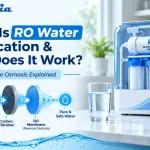
RO water purification uses pressure to push water through a thin membrane that allows water to pass while holding back many dissolved salts and other substances. RO stands for reverse osmosis. An RO purifier produces two streams: treated water for drinking and reject water that carries away the substances held back by the membrane. Whether you need RO at home depends on what a water test finds and what the purifier is designed to reduce.
In natural osmosis, water moves through a membrane from the side with fewer dissolved substances towards the side with more. Reverse osmosis applies pressure to the side with more dissolved substances. With enough pressure, water moves in the opposite direction. Many dissolved substances stay behind. Think of the membrane as a barrier that separates two flowing streams inside the purifier. The treated stream is also called permeate, and the reject stream is called concentrate.
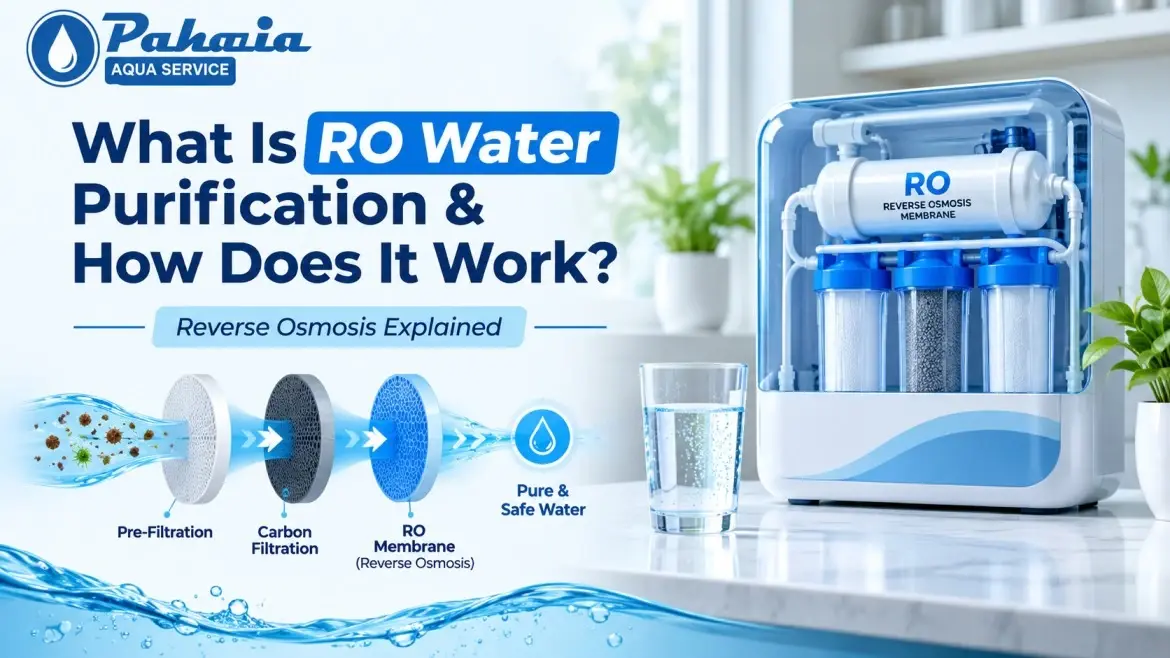
An RO system is the complete assembly that treats incoming water. The membrane does the separation, while the other components protect it, regulate the flow or prepare the treated water for dispensing. A typical household setup works in this order:
1. A sediment filter catches particles such as sand and rust. Many systems also use a carbon prefilter to reduce chlorine, which can damage some RO membranes.
2. Water pressure drives the incoming water through the RO stage. Some models use a booster pump to supply the required pressure.
3. Treated water may pass through a post-filter for taste. Depending on the model, it then goes to a storage tank or straight to the tap.
The sequence can vary when a model includes UV treatment or a mineral cartridge. If you are comparing systems or planning a new fit, check the model’s inlet pressure requirements and where the reject line will drain before booking RO installation.
The reject stream carries the concentrated dissolved substances out of the system. The amount varies by model and operating conditions. If water use matters to your household, compare how much reject water each model produces per litre of treated water under its stated test conditions. If an existing purifier suddenly delivers less drinking water than usual, a technician can check the feed pressure, prefilters and membrane. RO filter repair is one route to getting those filters checked.
RO can reduce dissolved salts and minerals such as sodium, calcium and magnesium. Some systems also carry verified reduction claims for specific contaminants such as lead or arsenic. Check the exact model’s performance sheet for the substance you want to reduce. Two purifiers with similar names or filtration stages can carry different claims.
If a lab report identifies a particular contaminant, look for that substance by name on the model’s performance sheet. The CDC guide to home water treatment systems explains how different treatment methods address different contaminants and why the label matters.
TDS stands for total dissolved solids. A handheld TDS meter estimates the overall level of dissolved material from the water’s electrical conductivity. Comparing readings before and after RO can help you track changes in performance over time. A TDS reading cannot identify which substances are present or establish whether the water is safe to drink. For example, two samples can give similar readings while containing different dissolved substances. A lab test targeted to your water source gives you more information for choosing treatment.
Identify where your kitchen tap water comes from. In some households, the source changes between municipal supply, borewell water and tanker water. If your supply changes, ask the lab whether to test separate samples. A single sample represents the source and conditions when you collected it.
Use the report to decide what you want the purifier to address. If the report points to excess dissolved salts or a specific chemical an RO model is verified to reduce, RO may be suitable. If the main issue is microbial contamination, look for treatment validated for the organisms of concern. Once you know what the system needs to do, you can compare models in the water purifier catalogue and check their individual specifications.
| Method | What it does | When to consider it |
| RO (reverse osmosis) | Uses a membrane and pressure to reduce dissolved salts and some specific contaminants. | Testing identifies dissolved substances that a particular model can reduce. |
| UV (ultraviolet) | Uses ultraviolet light to inactivate susceptible microorganisms. Dissolved salts remain in the water. | Germs are the main concern and the system is validated for the water conditions. |
| UF (ultrafiltration) | Uses a membrane to remove fine particles and certain microorganisms, depending on the filter. | Testing points to particles or organisms the selected filter can remove. |
Start with a water test, then look for a purifier with a verified reduction claim for the substances the report identifies. If you already own an RO purifier and its output has changed, Pahuja Aqua Service can help arrange a service check. Keep your purifier’s model number and recent water test results handy when you enquire.
RO is short for reverse osmosis. In water purification, it is the stage that uses pressure and a membrane to separate treated water from a stream carrying concentrated dissolved substances. Filters or UV stages included in the same purifier serve separate functions.
RO is a membrane treatment used in homes, commercial buildings and industrial facilities. Large systems can also desalinate seawater. The design depends on the incoming water, the required quality of the treated water and the volume the system needs to produce.
Yes. An RO membrane can reduce dissolved calcium and magnesium, the two minerals largely responsible for water hardness. If a model includes a mineral cartridge after the membrane, the final water can contain minerals added back by that stage.
An intact RO membrane can reduce bacteria and viruses. The protection a household purifier provides depends on the tested performance of the complete unit and how it is maintained. If a water test shows a microbial problem, choose treatment with a verified claim for the organisms of concern and follow the manufacturer’s servicing instructions.
Follow the manufacturer’s schedule and replace it sooner if testing or a service check shows it has lost performance. Feed water quality, usage and prefilter condition all affect how long it lasts. If flow drops, ask for a diagnosis because the issue can also come from a clogged prefilter or low inlet pressure. If you prefer scheduled upkeep, compare water purifier AMC plans and check whether membrane replacement is covered.